Yes / No Tarot · The Emperor
The Emperor: Yes or No?
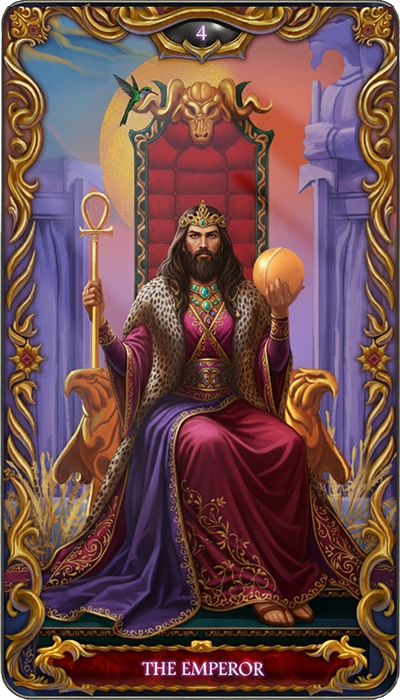
The Emperor as a yes or no card leans yes; authority and structure support movement toward the question, while reversed points to domination and rigidity.

- Upright verdict
- Yes
- Reversed verdict
- Maybe / Conditional
- Arcana
- Major Arcana
- Element
- Fire
- Zodiac
- Aries

Upright keywords: authority · structure · leadership · discipline
Reversed keywords: domination · rigidity · stubbornness
The Emperor Yes or No: Yes Meaning and Reading Guide
The Emperor: Why It Reads As Yes
The Emperor reads as yes because authority and structure support movement toward the question. A yes/no tarot page should not soften the verdict into vagueness. The useful work is to explain what kind of yes this is, when to trust it, and what conditions may change how the querent acts on the answer.
In the card’s ordinary meaning, The Emperor carries authority, structure, leadership. In a binary reading, those themes become directional. They either open the path, close the path, or show that the path is not ready to be judged. For The Emperor, the answer is yes because the card describes a situation where the querent must respond to authority before asking for certainty.
When the Verdict Is Most Reliable
The verdict is most reliable when the question is simple enough to answer. Ask, “Should I send this message this week?” rather than “Will this relationship become what I hope it becomes?” Ask, “Is this opportunity worth pursuing now?” rather than “Will my whole future improve?” The Emperor gives its cleanest yes when the question has one subject, one timeframe, and one real decision attached to it.
This card is also reliable when it appears in an outcome, advice, or final-answer position. If The Emperor appears as the first card in a multi-card spread, treat it as the opening condition rather than the entire verdict. If it appears after several clarifying cards, it can summarize the direction more strongly.
When to Override or Qualify the Verdict
Override the verdict only when the spread gives a clear reason. If The Emperor is surrounded by cards of delay, secrecy, or rupture, the answer may still be yes but the querent needs to name the condition. A yes can become “yes, but not without repair.” A no can become “no, unless the question changes.” A maybe can become “not enough information yet, but here is what would clarify it.”
Reversal is a qualification, not a magic switch. Reversed The Emperor highlights domination, rigidity, stubbornness. That tells the reader where the answer is distorted. If the upright verdict is yes, the reversed card explains why the querent may not be ready to use that answer cleanly.
The Emperor Upright vs Reversed in Yes/No
Upright, The Emperor says the card’s main force is visible. The question is meeting authority directly, and the verdict should be read with confidence. If the answer is yes, do not keep pulling cards because the answer feels too easy. If the answer is no, do not negotiate with the deck. If the answer is maybe, do not force a binary before the hidden factor reveals itself.
Reversed, The Emperor points to domination. The answer remains yes, but the querent must handle the distortion first. In practice, that means slower timing, cleaner wording, or a willingness to ask the uncomfortable follow-up question.
Common Mistakes Reading This Card for Yes/No
The first mistake is treating The Emperor as only a keyword list. authority does not automatically mean yes or no by itself; the verdict comes from how the whole card behaves in a decision. The second mistake is asking the same question repeatedly until the card gives a more comforting answer. That turns tarot into reassurance-seeking instead of reflection.
The third mistake is ignoring the question’s ethics. A yes/no spread is useful for your own choices. It is weaker when used to control another person’s private feelings. The Emperor can describe the visible pattern, but it should not be used to bypass consent, communication, or personal responsibility.
Frequently Asked Questions
Is The Emperor a yes or no card?
The Emperor is a yes card in this yes/no system. The verdict is not a mood; it comes from how the card’s traditional meaning behaves in a binary question. Use the answer first, then look at surrounding cards for conditions.
Why does The Emperor answer yes?
The Emperor answers yes because its central themes are authority, structure, leadership. In a yes/no spread, those themes support forward movement.
Does The Emperor reversed change the verdict?
Reversal does not automatically change The Emperor from yes to its opposite. It shows domination and rigidity, which qualifies the answer. Read it as timing, condition, or warning before you override the core verdict.
When should I trust The Emperor in a yes/no draw?
Trust The Emperor most when the question is specific, time-bounded, and emotionally honest. The card is less reliable when the question hides two different issues in one sentence or asks tarot to decide something the querent already knows they must choose.
Full The Emperor meaning
For the full meaning of The Emperor — including upright and reversed interpretations, love and career readings, symbolism, and numerology — see the The Emperor tarot card meaning.