Minor Arcana · Swords · Five
Five of Swords
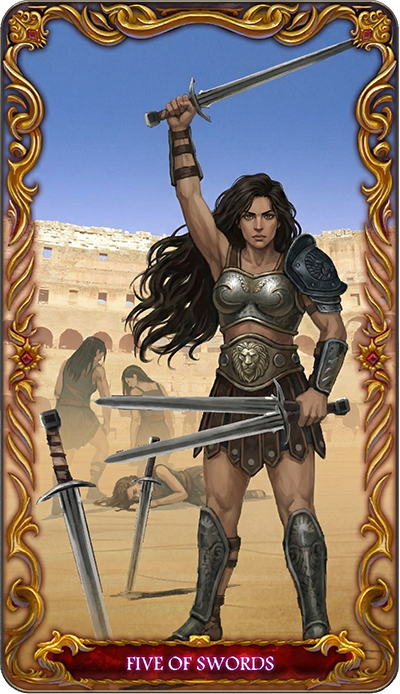
The Five of Swords tarot card meaning centers on conflict, defeat, tension, hollow victories, resentment, and the cost of needing to win.

- Suit
- Swords
- Rank
- Five
- Number
- Five
- Element
- Air

Five of Swords Tarot Card: Meaning, Reversed, Love & Career
What does the Five of Swords mean?
The Five of Swords means conflict, defeat, tension, and the painful cost of a battle no one truly wins. It often appears around arguments, power struggles, or sharp words. Reversed, the Five of Swords can show reconciliation, past resentment, repair attempts, or the decision to step out of the fight.
Five of Swords upright meaning
Upright keywords: conflict, defeat, tension
Upright, the Five of Swords is the card of the hollow victory. Someone may have won the argument, taken the last word, or controlled the room, but the energy left behind feels cold. This is not clean truth like the Ace. This is truth mixed with pride, defensiveness, or the need to dominate.
In the Rider-Waite-Smith image, one figure gathers swords while two others walk away. The sky is unsettled. The winner does not look peaceful. The scene asks a simple question: what did this victory cost?
In a reading, I treat the Five of Swords as a warning against confusing power with clarity. It can show conflict, betrayal, gossip, passive aggression, workplace tension, relationship arguments, or the moment when someone would rather be right than connected. It can also show the exhaustion of dealing with someone who keeps moving the goalpost.
The practical message is discernment. Some conflicts need direct confrontation. Some need boundaries. Some need you to put the sword down and refuse the terms of the fight. The card does not ask you to surrender your truth. It asks whether this battle is worthy of your energy.
Five of Swords reversed meaning
Reversed keywords: reconciliation, past resentment
Reversed, the Five of Swords shows the aftermath. The argument may be over, but the air still remembers it. This card can point to reconciliation, apology, repair, or the slow work of rebuilding trust after sharp words. It can also show resentment that has gone quiet without being resolved.
Sometimes the reversal means someone is ready to stop fighting. Pride softens. A person admits they pushed too hard. A conversation becomes possible because winning is no longer the only goal. Other times, it shows the need to accept that not every conflict can be repaired by another conversation.
The reversed Five asks you to look honestly at your part without taking responsibility for everyone else’s choices. Did you say something that needs repair? Did you stay too long in a dynamic where the terms were unfair? Are you still carrying a battle that ended months ago?
The cards show peace becoming possible when the old fight stops being fed.
Five of Swords in love and relationships
In love, the Five of Swords can show arguments, defensiveness, blame, silent punishment, or a pattern where being right matters more than being connected. Reversed, it may show apology, repair, reconciliation, or the realization that some fights cannot become healthy without changed behavior.
Five of Swords in career and money
In career and money, the Five of Swords points to workplace conflict, competition, tense negotiation, politics, or a win that damages trust. Reversed, it may show de-escalation, repair after disagreement, or the need to stop spending energy on a battle that does not serve your work.
Five of Swords symbolism
The Five of Swords shows a figure holding swords while others walk away. The uneven sky and distant water suggest emotional disturbance after conflict. The gathered blades show control, but the departing figures reveal the cost. The card asks whether victory has become disconnected from wisdom.
Correspondences
- ElementAir
Five of Swords is attributed to Air in the Golden Dawn / Book T system.
Five of Swords tarot combinations
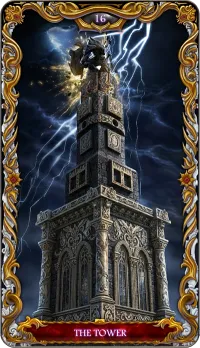 Five of Swords + The Tower: conflict may expose a structure that was already unstable.
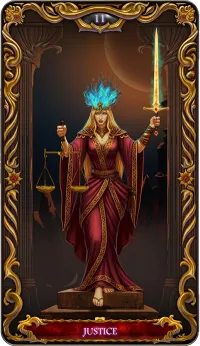 Five of Swords + Justice: accountability is needed after a tense exchange.
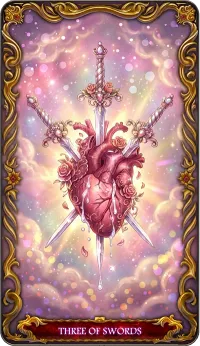 Five of Swords + Three of Swords: words or actions may have caused real hurt.
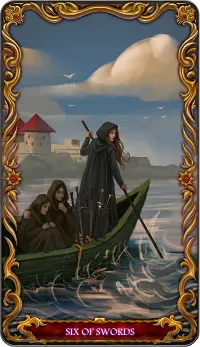 Five of Swords + Six of Swords: leaving the conflict may be wiser than winning it.
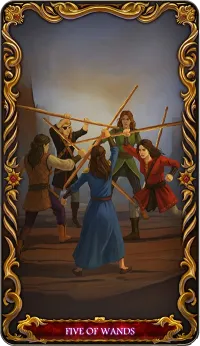 Five of Swords + Five of Wands: competition can escalate into sharper conflict if unchecked.
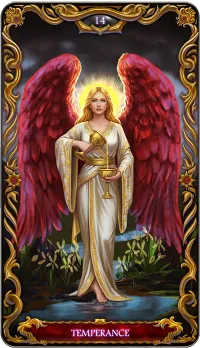 Five of Swords + Temperance: de-escalation and measured language are the medicine.
A first-person reading example
In a reading, I would not soften the Five of Swords too much. I would ask what this conflict is costing you, and whether winning would actually give you peace. If this is about love, I would look for the pattern under the argument: contempt, defensiveness, fear, pride, old resentment. If this is about work, I would ask whether the room rewards clarity or power games. The cards show that a sword has been lifted. You still decide whether it needs to be used, lowered, or walked away from.
Frequently asked questions
Is the Five of Swords a yes or no card?
The Five of Swords usually leans toward caution rather than a simple yes. It suggests conflict, tension, or a cost that needs to be considered. If your question involves pushing ahead, the card asks whether the victory would be worth what it takes.
What does the Five of Swords mean in love?
In love, the Five of Swords can show arguments, blame, defensiveness, or a relationship pattern where someone needs to win. It asks whether the conflict is creating clarity or simply deepening distance. Reversed, it may show repair or a choice to stop fighting.
What does the Five of Swords reversed mean?
The Five of Swords reversed can point to reconciliation, apology, de-escalation, lingering resentment, or the aftermath of conflict. It asks what repair is possible and what must actually change for peace to become more than silence.
Is the Five of Swords a bad card?
The Five of Swords is challenging, but it is not bad. It brings attention to conflict, pride, and hollow victories so you can choose differently. It asks whether your words, boundaries, and battles are aligned with your deeper values.
What is the Five of Swords associated with?
The Five of Swords is associated with air, the number 5, conflict, defeat, tension, competition, resentment, and the cost of winning. It often appears when communication has become sharper than the truth it is trying to serve.
What does the Five of Swords mean for career?
For career, the Five of Swords can show workplace politics, tense competition, arguments, or a negotiation that leaves damage behind. Reversed, it may show repair, de-escalation, or the need to redirect energy away from a professional fight that drains you.